
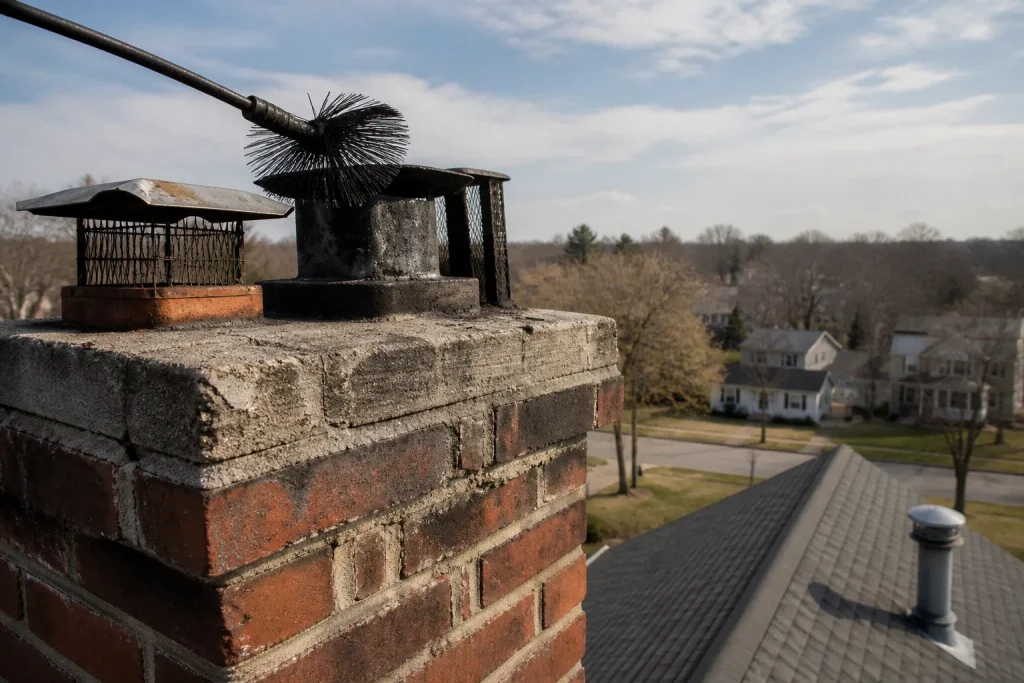
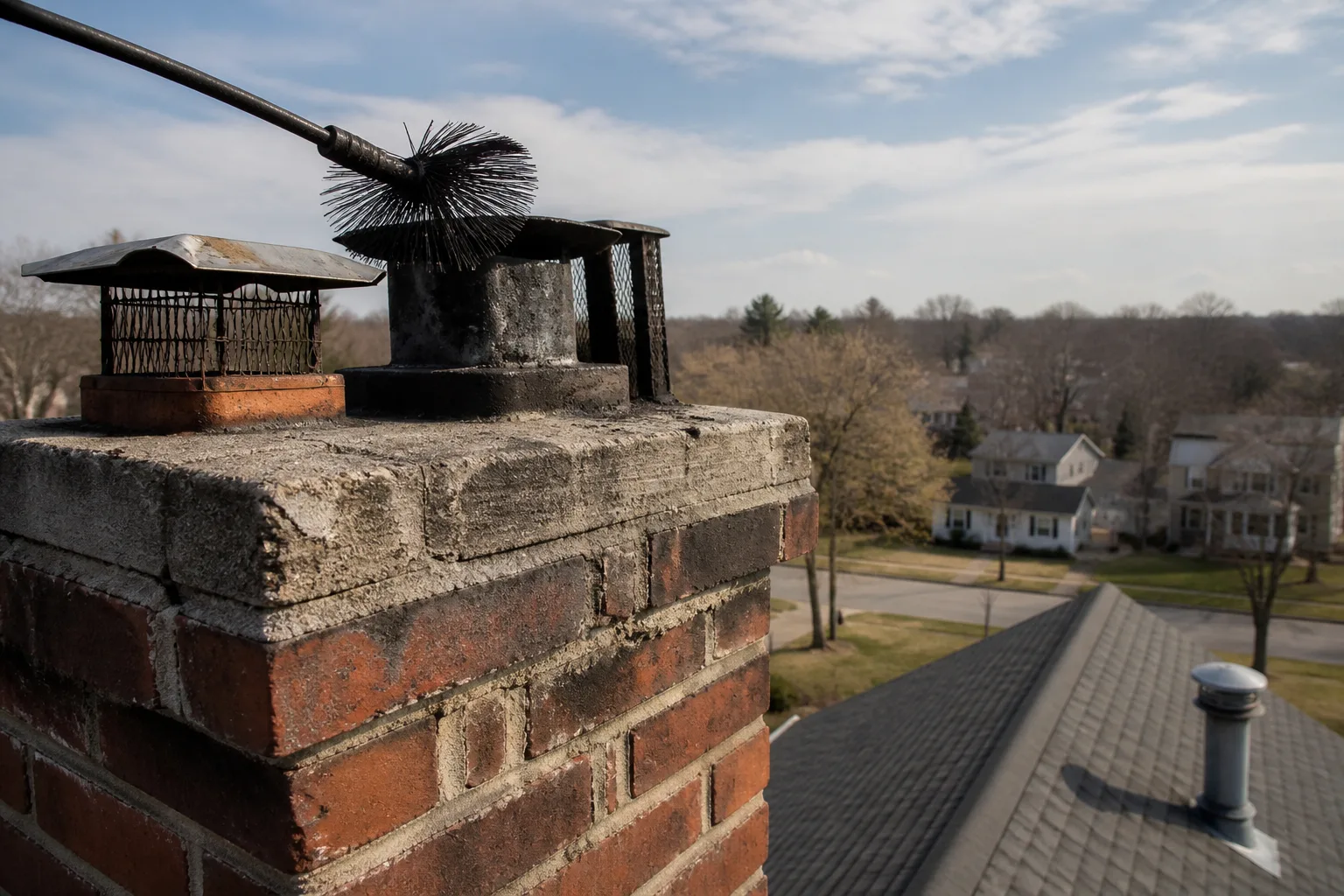
Top Signs You Need Chimney Cleaning Service – Don’t Ignore These
Most chimney problems give you warning signs months before they become expensive. The trouble is that the earliest signals don’t look like chimney problems at all. They look like a stain on the brick, a fireplace that’s a little stubborn to light, or a smell you notice after a fire burns down. In Antioch, where wood-burning fireplaces get real use through the heating season, those small signals are worth reading correctly. Below are the signs homeowners miss most often, what each one actually means, and when it’s time to book a chimney sweep.
Quick answer: you need chimney cleaning when you see soot or creosote buildup, when the fire burns poorly or smells off, when brick or mortar is staining or crumbling, or when it’s been a year or more since the last sweep. If you’d rather not sort it out yourself, call (844) 625-6985 and we’ll inspect it and tell you what we find.
Key Takeaways
- White staining on exterior masonry (efflorescence) points to water moving through the chimney, not just weathering.
- A sweet or tar-like smell after a fire often signals a later, heavier stage of creosote than a plain smoky smell.
- A fireplace that’s harder to light than it used to be may have partial blockage or a failing liner.
- An unused fireplace still needs an annual check for nesting animals, moisture, and damper corrosion.
- A thin black line around the fireplace opening means smoke is escaping around the firebox instead of going up the flue.
Stains, Spalling, and Crumbling Mortar: The Exterior Signs Homeowners Misread
The most overlooked sign of a chimney problem is on the outside of the house. A white, chalky stain running down the brick is usually efflorescence, and it means moisture is moving through the masonry. Water has gotten in somewhere, dissolved minerals from the brick and mortar, and deposited them on the surface as it dried. That’s not cosmetic. Repeated wet-and-dry cycles push the masonry apart from the inside, and over time they can crack the flue itself.
Look for these exterior signals in Antioch:
- White staining (efflorescence) on brick or mortar, especially after heavy rain.
- Spalling brick: the face of a brick flaking or popping off. That’s freeze-thaw damage, and it means water is inside the brick.
- Eroded mortar joints: the lines between bricks receding or crumbling. Receding joints let in more water, which speeds up the whole cycle.
- A cracked or missing crown: the concrete cap on top of the chimney. A failing crown is one of the most common entry points for water.
Homeowners often write these off as “just an old chimney.” In our experience, they’re early warnings that a chimney cap & crown repair or resurfacing could still fix cheaply, before the damage reaches the flue. Products like HeatShield are designed for exactly this kind of flue resurfacing and restoration. Once you can see white staining or spalling, it’s worth a look.
What Your Fireplace Smell Is Telling You About Creosote
Creosote builds up in stages, and the smell changes with each stage. That’s the part most lists skip. A light, smoky odor after a fire is normal for a wood-burning fireplace. A sweet, acrid, or tar-like smell that lingers long after the fire is out, or gets worse in warm, humid weather, points to heavier creosote that’s condensed inside the flue. Heavier creosote is also the kind that’s harder to remove and carries a higher risk if it ignites.
Here’s how the smell tends to track with what’s going on inside:
- Faint smoky smell, mostly during use: typical, low-level soot. A routine sweep usually handles it.
- Smell that lingers after the fire is out: a sign that more creosote is accumulating than a clean flue would hold.
- Sweet, sharp, or tar-like odor: heavier, glazed creosote. This is the stage that calls for a professional sweep, not a brush from the hardware store.
- Smell plus smoke backing into the room: a draft or blockage problem on top of the buildup. Time to stop burning and call.
If the odor in your Antioch home has changed, don’t wait for it to smell worse. A sweep and inspection tell you what stage you’re at and whether the flue needs more than cleaning.
A Fireplace That’s Harder to Light Than It Used to Be
If your fireplace used to catch quickly and now it takes three tries and a lot of kindling, that’s a real signal. A wood fire depends on steady airflow up the flue. When the draft weakens, the fire struggles, and the cause is often inside the chimney: partial blockage from soot or debris, a nest or animal intrusion, or a liner that’s deteriorated enough to disrupt the draft.
Difficulty lighting isn’t the only symptom. Watch for these together:
- Smoke curling into the room instead of going up.
- A fire that burns unevenly or goes out on one side.
- More smoke than usual when you first light it.
- A damper that doesn’t open smoothly or feels stuck.
Each of these can point to a different cause, which is why a proper inspection matters before anyone starts recommending repairs. We don’t guess at what’s wrong. An inspection shows what’s actually happening inside the flue, and the fix follows from that. If your fire is fighting you, call (844) 625-6985 and we’ll take a look before the problem turns into something bigger.
Why an Unused Fireplace Still Needs an Annual Check
Plenty of Antioch homeowners assume a fireplace they never use doesn’t need attention. It does. A chimney that sits idle collects problems that have nothing to do with fire. Birds and small animals nest in open flues, moisture works its way in through an uncapped top, and the metal damper corrodes from the inside out. None of that requires a single log to develop.
An annual inspection on an unused chimney catches:
- Animal nesting and debris blocking the flue, which can cause odors or drafts in the house.
- Moisture intrusion from a missing cap or a failing crown.
- Damper corrosion that can make the fireplace unsafe to use later if you decide to fire it up.
- Cracked or deteriorating liner, which matters even if the chimney is idle now.
If the fireplace has been sitting unused for years, this is the check to book before you ever think about lighting it. We install Gelco and Famco caps and venting components, and we’ll tell you whether you actually need a cap, a crown repair, or nothing at all.
The Sign You Probably Walked Past: A Thin Black Line Around the Fireplace Opening
Look closely at the seam where your fireplace opening meets the surrounding brick or surround. A thin black line, or a faint smoke stain creeping out beyond the opening, is one of the most ignored interior signs. It means smoke has been escaping around the firebox rather than going up the flue. That smoke carries creosote and combustion byproducts into the room instead of out of the house.
Common causes include a draft problem, a damaged or missing damper, a firebox that’s separated slightly from the surround, or a flue that’s undersized for the firebox. The line itself looks harmless. What it represents is worth fixing. If you notice one, don’t keep burning until someone looks at it.
For any of these signs, the right next step is the same: get an inspection before you spend money on a repair. We’ve seen too many homeowners quoted for a full liner when a cleaning and a cap would have solved it. We use professional-grade materials from brands like DuraFlex and HeatShield when a liner or resurfacing is genuinely needed, and we tell you plainly when the work can safely wait.
When to Call a Pro
Some jobs are worth a look. Chimney cleaning and inspection aren’t among them, especially with creosote buildup and structural concerns in the mix. Call a professional if you notice:
- Soot or creosote you can see, or a fireplace that’s gone a year or more without a sweep.
- White staining, spalling brick, or crumbling mortar on the outside of the chimney.
- A sweet or tar-like smell after a fire.
- Smoke backing into the room or a black line around the fireplace opening.
- A fireplace that’s harder to light than it used to be.
Related services in Antioch: we handle fireplace repair and full structural chimney work alongside sweeps and inspections, so one visit can cover more than one issue. Our technicians have up to 12 years of experience, and we tell you what we find, and what actually needs fixing.
The Bottom Line
The clearest signs you need chimney cleaning often hide in plain sight: a stain on the brick, a smell that’s changed, a fire that’s stubborn to start, or a black line around the opening. None of them mean you’re facing an emergency, but each one means it’s time for an inspection. The best time to catch a chimney problem is before the heating season, not after it shows up in the middle of a cold Antioch night.
If you’re in Antioch and need help, Antioch Chimney Sweep offers free estimates, call (844) 625-6985. We answer 24/7. Fast dispatch from 7am to 7pm, Sunday through Friday. One call covers the inspection, the sweep, cap and crown work, and any repairs that turn out to be needed.
Frequently Asked Questions
Most wood-burning chimneys should be swept once a year, ideally before heating season begins. If you burn often or use unseasoned wood, more frequent sweeps make sense. An annual inspection tells you whether the flue needs cleaning. Call (844) 625-6985 for a free estimate.
White staining is usually efflorescence, and it means moisture is moving through your masonry. Water gets in, dissolves minerals, and leaves them on the surface as it dries. It’s an early warning that water is getting into the chimney, often through a failing crown or missing cap. Call (844) 625-6985 and we’ll inspect it.
A basic top-down brush is possible for light soot, but heavier creosote, glazed buildup, and any structural issue call for a professional. Creosote accumulation and flue deterioration are hard to judge from the outside, and an inspection shows what’s really inside. Call (844) 625-6985 for a sweep and inspection.
A faint smoky smell right after a fire is normal. A smell that lingers, or one that turns sweet or tar-like, points to heavier creosote and means it’s time for a sweep. Don’t keep burning until it’s checked. Call (844) 625-6985 for a free estimate.
Written by the team at Antioch Chimney Sweep.
Need Chimney Cleaning Help?
Call Antioch Chimney Sweep - the local pro we connect you with is licensed and insured, with free written estimates in Antioch.
(844) 625-6985