
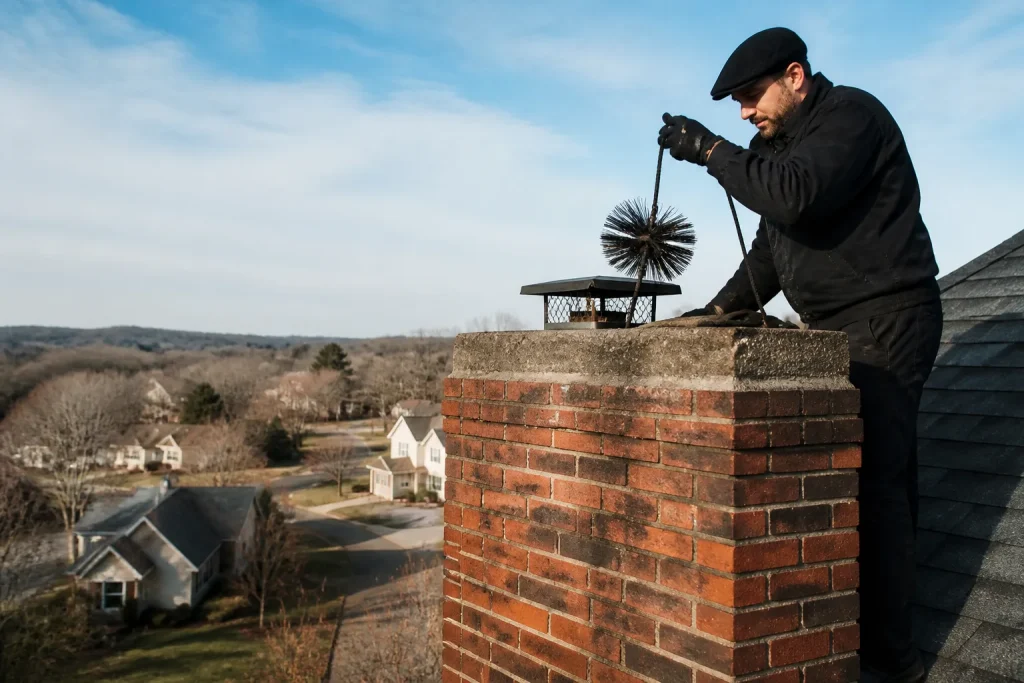
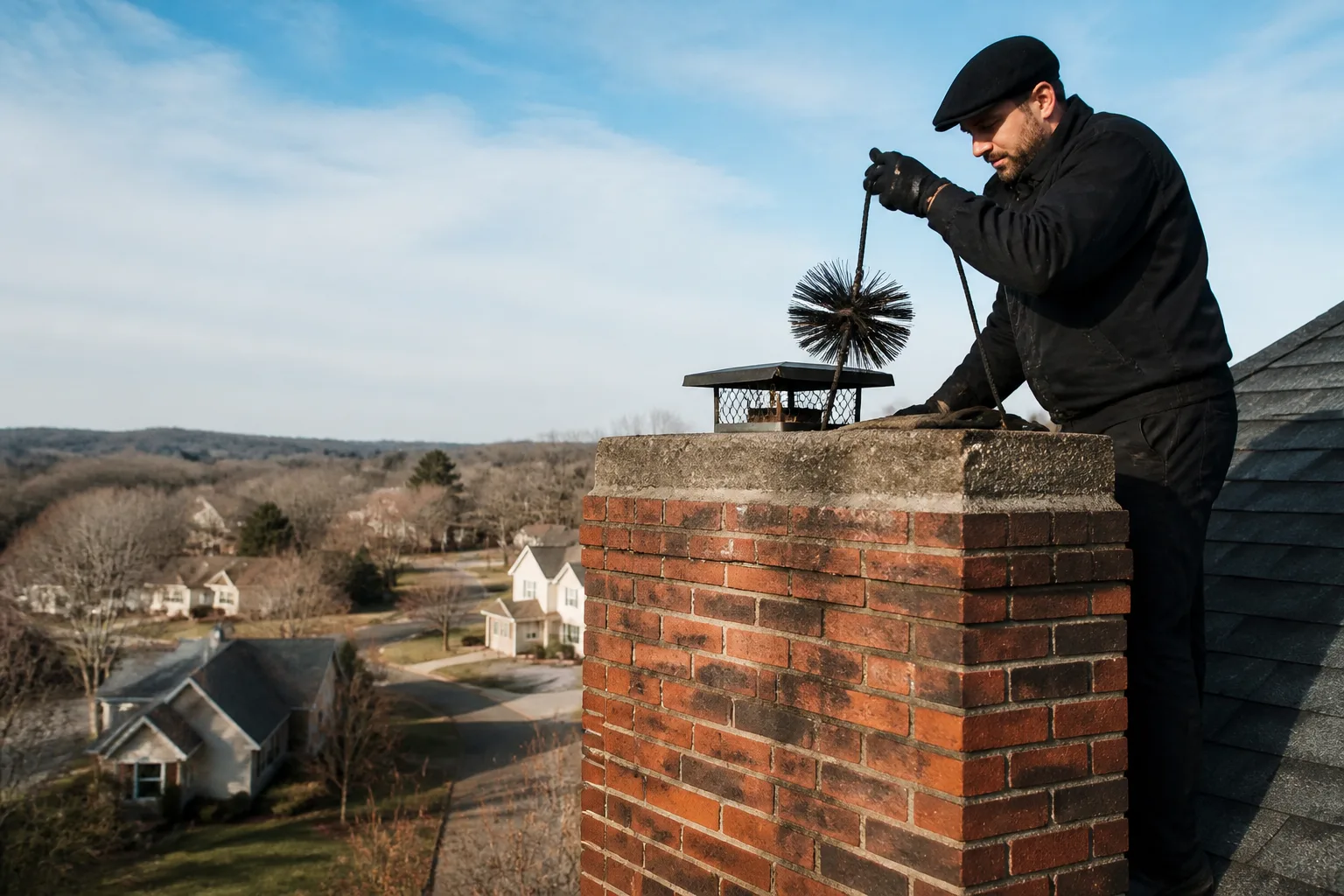
Famco Chimney Sweep in Antioch: A Homeowner’s Guide
A Famco chimney cap that’s the wrong size for your flue tile isn’t protecting your chimney, it’s just decorating it. That’s the part most homeowners never hear. When you search “Famco chimney sweep in Antioch,” you’re really trying to understand two things at once: what this brand actually does on a chimney, and how to make sure whoever installs it gets the details right so you’re not chasing leaks next spring. This guide covers both, in plain terms.
If you’d rather skip the DIY homework, call (844) 625-6985. We answer 24/7, with fast dispatch from 7am to 7pm, Sunday through Friday.
What does Famco actually make for chimneys?
Famco is a chimney and venting manufacturer. The products most relevant to a residential chimney in Antioch are caps, dampers, draft inducers, and venting components. A chimney cap tops the flue to keep rain, animals, and debris out while letting smoke escape. A top-sealing damper closes off the flue when the fireplace isn’t in use, which matters on cold Antioch nights when a drafty chimney pulls warm air up and out. Draft inducers help problem flues move exhaust more reliably. Venting components tie into the broader system that carries exhaust safely away from the house.
Here’s the distinction that trips people up. Famco makes the hardware, but hardware on a shelf doesn’t know your chimney. Your flue has a specific tile size, a specific liner type, and a specific height above the roofline. A Famco cap is only doing its job when it matches those numbers. The brand gets you a professionally specified product; the sizing and installation decide whether it actually works.
We source Famco alongside other professional industry brands like DuraFlex and Olympia Chimney, because the right answer for one chimney isn’t always the same product. A chimney specialist picks the component to fit the flue, not the other way around.
How does flue sizing decide which Famco cap you need?
Flue sizing is the single biggest factor in whether a Famco cap protects your chimney or just sits on top of it. Caps are matched to the outside dimensions of the flue tile or the liner termination, not to some generic “small, medium, large.” If you order a cap without measuring the flue, you’re guessing, and guessing wrong is how water gets in.
When a cap is too loose, wind-driven rain drives under the edges and down the flue. When it’s too tight or doesn’t seat correctly, it can interfere with the opening or fail to seal at the base. Both outcomes cause the same problem: moisture inside a chimney that should be dry. Over a Middle Tennessee winter, that moisture freezes and thaws, and masonry doesn’t love that cycle.
What needs to be measured before anyone orders a Famco part:
- The outside dimensions of the flue tile, corner to corner and side to side
- How many flues the chimney has, and whether each needs its own cap
- The liner type already in place, or the liner being installed
- Clearance from the cap to the crown and surrounding structure
- The chimney’s height and exposure, since wind load matters on a tall stack
A proper inspection is how those numbers get confirmed rather than assumed. That’s why a chimney sweep visit is often where the conversation starts, not where it ends. We tell you what we find, including what actually needs fixing, before any part gets ordered.
Universal-fit vs. custom-fit caps: what holds up over five years?
A universal-fit cap and a custom-fit cap can look similar on install day. Where they part ways is year three, four, and five in Middle Tennessee weather, which brings humid summers, freeze-thaw winters, and the occasional strong storm front rolling through Antioch.
A universal-fit cap is built to cover a range of flue sizes with adjustable or oversized elements. It’s the faster, cheaper path. The tradeoff is a looser fit, more places for rain to sneak in, and more movement in wind. Over several seasons, that movement can work fasteners loose and let the cap shift off-center.
A custom-fit cap is sized to your exact flue dimensions. It seats snugly, sheds water the way it’s designed to, and has far less play in a storm. That snug fit is also what keeps animals out, since a gap a squirrel can exploit is a gap rain can exploit too.
In our experience, the custom-fit route is the one homeowners stop thinking about. The universal cap is the one they end up calling back about. Neither is a scam, but only one is matched to your chimney.
Why does the mounting method affect whether the cap stays put?
The mounting method decides whether a Famco cap survives a storm. There are two common approaches, and the right one depends on your chimney’s construction.
Single-flue mount secures the cap to an individual flue tile using legs or a bracket that grips the tile itself. It works well on a chimney with one flue, or where flues are spaced apart. It’s compact and straightforward, but on a chimney with multiple flues bunched together, it can be awkward to fit cleanly.
Full-width mount spans the entire top of the chimney, anchoring to the crown or the masonry rather than a single tile. It’s the sturdier option on multi-flue chimneys and handles wind better because it’s tied across the full width instead of one tile edge.
Here’s where installation quality matters as much as the part. A cap anchored loosely, or one mounted to a crumbling crown, won’t stay put regardless of which method was used. The crown is the concrete top surface of the chimney, and if it’s cracked or spalling, the anchor has nothing solid to hold. That’s why cap work and crown work usually get handled together, through chimney cap & crown service, so the cap has a sound surface to attach to. A storm is a lousy time to discover the anchor wasn’t set right.
What should you ask before a company orders Famco parts?
Before anyone orders parts for your chimney, you should be able to get clear answers to a few specific questions. A company that knows chimneys will answer them without hesitation. One that’s guessing will get vague. Ask:
- What’s the exact model number of the cap or component? A real part has a real number you can look up.
- What are the measured flue tile dimensions? They should be written down, not eyeballed.
- What liner type is in place, and does the new part match it? A cap sized for one liner can be wrong for another.
- How will it be mounted, single-flue or full-width, and why? The answer should reflect your chimney’s construction, not a default.
- Is the crown sound enough to anchor to? If not, that gets addressed first.
These questions aren’t suspicion, they’re just how a good chimney conversation goes. A technician who has done this for years expects them. In Antioch, where plenty of homes have chimneys that have seen a few decades of Tennessee weather, the details matter more than the brand name on the box.
When to call a pro
Some chimney work is a phone call, and some is a phone call before you touch anything. If you’re pricing out a Famco cap because you’ve noticed water stains, a missing or loose cap, rust streaks on the firebox, or animals getting in, that’s a call. If you’re dealing with a cracked crown or crumbling mortar at the top of the chimney, that’s also a call, and you’ll want the cap and crown looked at together. Liner work and any question about a deteriorating flue belongs with a trained professional, since a compromised liner is a safety issue, not a weekend project.
For a fireplace that’s smoking or not drafting right, fireplace repair is where the diagnosis usually leads, and it’s often tied to cap and damper condition. Chimney work in Antioch is what we do, so we can look at the whole system and tell you plainly what needs fixing and what can safely wait.
Related services in Antioch: chimney sweep and inspection, fireplace repair, and chimney cap and crown work. If you’re not sure which you need, start with an inspection and let the findings guide it.
The Bottom Line
Famco makes solid chimney products, but the brand is the easy part. What actually protects your chimney is a cap that’s sized to your flue, mounted the right way, and anchored to a sound crown. A wrong-sized cap does nothing useful, and a loose mount turns a storm into a callback. Before you buy parts, get the flue measured, the liner identified, and the mounting method chosen for your chimney, not for a generic one. Check the crown while you’re up there too, since it’s the foundation for anything you mount on top.
If you’re in Antioch and need help, Antioch Chimney Sweep offers free estimates. Call (844) 625-6985. We answer 24/7, and fast dispatch runs 7am to 7pm, Sunday through Friday. One call covers inspection, cleaning, cap and crown, and repair, so you’re not bouncing between companies to get it sorted.
Frequently Asked Questions
Do I need a Famco-brand cap specifically? No, you don’t need that brand specifically; what matters is that the cap is correctly sized to your flue and mounted properly. Famco is one professional brand we work with, alongside others like DuraFlex and Olympia Chimney, and the right choice depends on your chimney’s measurements and liner. Call (844) 625-6985 for an exact quote; estimates are free.
How do I know if my current chimney cap is the wrong size? A wrong-sized cap usually shows up as water intrusion, a loose or shifted cap after wind, rust streaks on the firebox, or animals getting in around the edges. The only reliable way to know is to measure the flue tile and compare it to the cap. Call (844) 625-6985 and we’ll take a look; the estimate is free.
Can a chimney cap be installed without inspecting the crown first? It can, but it shouldn’t be. A cap anchors to the crown or the flue tile, and a cracked or crumbling crown gives the anchor nothing solid to hold. Inspecting and repairing the crown first is what keeps the cap in place through the next storm. Call (844) 625-6985 to have both looked at together.
How often should a chimney be swept if I’m adding a new cap or damper? Adding a cap or damper doesn’t change the sweeping schedule, which depends on how much you burn and what builds up in the flue. Annual inspection is the usual starting point for a wood-burning fireplace, with sweeping as findings call for it. An Antioch Chimney Sweep inspection will tell you where things stand. Call (844) 625-6985 for a free estimate.
Written by the team at Antioch Chimney Sweep.
Need Chimney Cleaning Help?
Call Antioch Chimney Sweep - the local pro we connect you with is licensed and insured, with free written estimates in Antioch.
(844) 625-6985